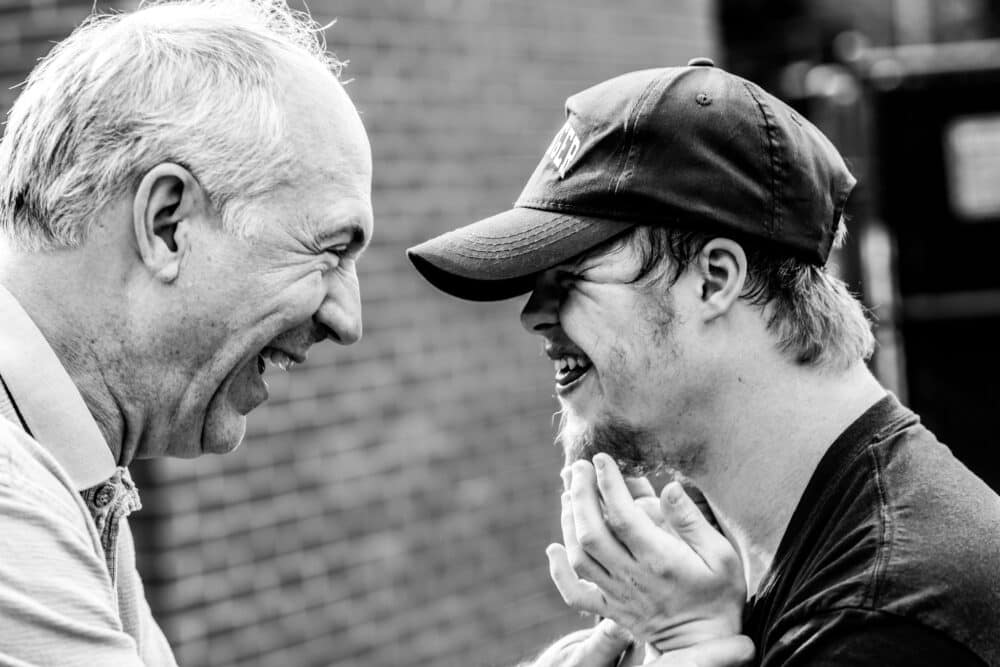
The cleaning service of Gureak Garbitasuna evolved to a model focused on the people who reconcile two needs are seemingly contradictory: the structuring that require people with intellectual disability to perform their job and the flexibility required by the model of Care Centered on the Person of Matia Fundazioa.
The result was Zeurekin, a service that converts the cleaning tasks into opportunities for human connection, while maintaining the economic viability and demonstrating that strategic design can create social and business value simultaneously.
The design challenge
The challenge was not easy: how to design a service that would keep the operational efficiency needed to be economically viable, while she adjusted to the individual needs of each resident? How to create a system that would allow workers with different degrees of autonomy and offer a personalized treatment without give you anxiety or frustration? The challenge went beyond what operating; it was fundamentally a human.
Had to preserve the existing jobs while creating new roles are more specialized, all the while maintaining a cost similar to the current service in. The complexity lay in balance three dimensions seemingly contradictory: the quality of care, the inclusion in the workplace and economic sustainability.
Methodology and process
My approach combined the depth of ethnographic research with the rigor of systems thinking, structured in four key phases that guided the development of the service Zeurekin.
Phase 1: strategic Research
I took a deep dive into residences, analyzing european trends of the Person-Centered Care and the Model Matia. Through interviews and ethnographic participant observation, I was able to identify needs invisible and moments of failure in the service.
Phase 2: Immersion and analysis
I did a process of shadowing and I drew up maps of experience that revealed that the true value was to transform the cleaning of utilitarian task to significant experience.
Phase 3: Ideation and co-design
I conducted interviews and sessions of co-creation with the different stakeholders, Using Service Design Canvas, we developed two drafts and prototypes fast. The concept Zeurekin emerged as a synthesis collective.
Phase 4: Definition and development
I designed the full-service, designing new roles, training materials and an implementation plan for phase-aligned with the Person-Centered Care.
Outcome and impact
Zeurekin transformed the cleaning service is traditional in an experience that is people-centred, based on four key pillars: flexibility to adapt to the rhythms of the residents, personalized treatment using tabs biographical, better coordination with the staff of care, and integration ofmeaningful activities where residents participate in daily tasks.
The results demonstrated that it is possible to balance social impact and economic viability: it is kept all the jobs, created new specialized roles and, although the cost rose to 13%, the human value-added justified fully in line with this investment.
The role of design
As a designer of services, I developed a strategic approach that integrated research deep with systemic thinking. Sinteticé needs of various users – older people and workers with disabilities – transforming limitations into opportunities.
through co-creation, medié between visions organisational and I redesigned both interactions as structures, creating a service that is scalable that integrates economic sustainability with social impact is tangible.